

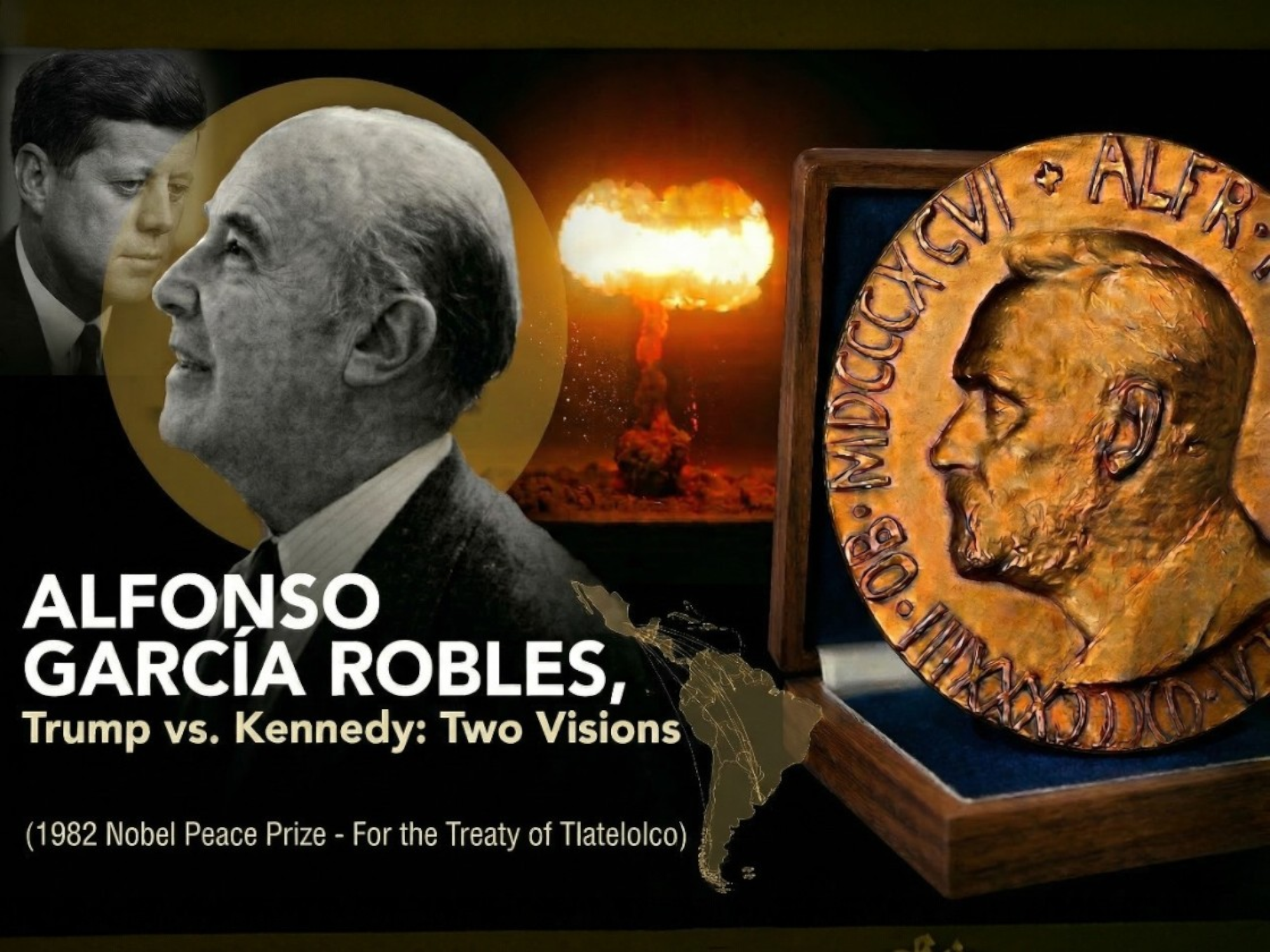
Picture Source: IT Capital original -Alfonso Garcia Robles, the lesser-known Mexican Nobel Prize winner.
Summary
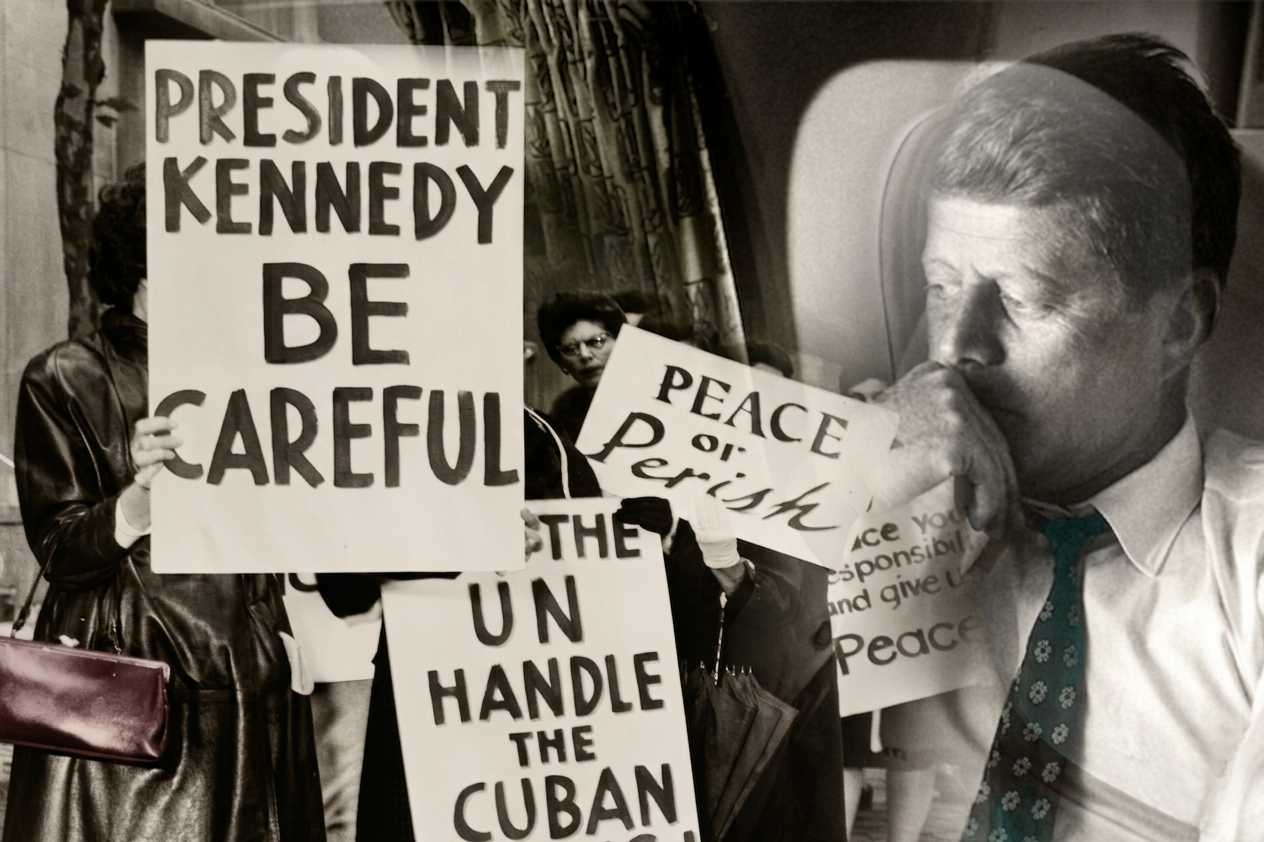
Research Article Appro. (March 16th, 2026). The Treaty for the Prohibition of Nuclear Weapons in Latin America and the Caribbean, also known as the «Treaty of Tlatelolco» or «Tlatelolco Shield» (33 LatAm countries represented in the United Nations), was a pioneering diplomatic agreement signed on February 14, 1967, transforming the region into the world’s first Nuclear-Weapon-Free Zone (NWFZ) in a densely populated territory. Driven by the fear of imminent nuclear war as a result of the Cuban Missile Crisis, which was resolved by President John F. Kennedy and White House diplomats in the most difficult negotiation in history with Soviet Prime Minister Nikita Khrushchev (URSS), this treaty guaranteed that the region would abandon the development, possession, and use of such weapons in Latin America for the last 59 years.
On March 7, 2026, President Donald Trump held a high-level summit at the Doral Resort in Miami, Florida. The official event for the president is called «The Shield of the Americas.» (12 countries represented) Its main goal was to change the security structure of the Western Hemisphere based on a new military vision for the next few years that would last permanently in LatAm.
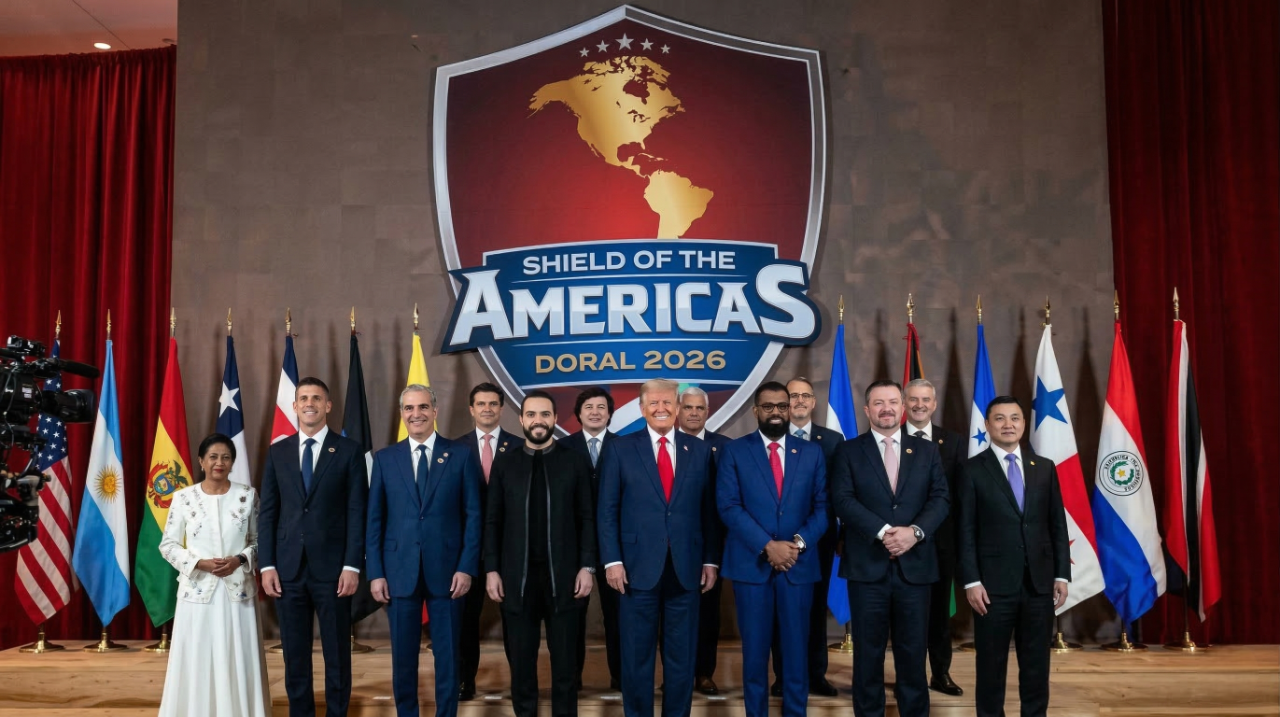
The name "The Shield" is not a linguistic coincidence but an attempt to reappropriate a historical concept of regional security:
The «Strategic Shield» of Tlatelolco (1967): The diplomat Alfonso García Robles He was the first to present denuclearization not as a weakness but as a «strategic shield» that protected the sovereignty of Latin America against the collateral destruction of the Cold War and future war.
The «Shield of the Americas» (2026): Trump uses the term to project a defense against internal threats (cartels) and «old hostile influences» (such as Cuba), framed within what analysts call the «Donlo Doctrine,» which seeks to strengthen US hegemony in the LatAm region permanentely.
Reactivation of the Military Nuclear Purpose? This is where the legal protection of 1967 clashes with the strategic ambition of 2026.
● The Legal Barrier (OPANAL): The Treaty of Tlatelolco strictly prohibits the placement, control, or testing of nuclear weapons in the region. Furthermore, the Protocol II obliges the powers (including US, China and Russia) to respect this status.
● The Trojan Horse (SMR): The implementation of Small Modular Reactors (SMRs) For «peaceful» purposes (CAF-IAEA agreements of 2025), this could be the blind spot. Although its use is civilian, the ACCC could lobby for this energy infrastructure to power military logistics bases under US command, blurring the line of «peaceful ends.»
● Integrated Control: By placing its military capabilities under the «American leadership at the forefront,» the ACCC countries could de facto cede control of the strategic space to a nuclear power, which would violate the spirit of autonomy of Tlatelolco.
«It is very likely that the US will use the new «Shield of the Americas» (ACCC) to protect itself from China’s and Russia’s growth in the region by building up its conventional military in Latin America.«But if the military were to directly reactivate sensitive nuclear assets, it would cause a legal crisis that has never happened before with the OPANAL, new nuclear projects like the Small Modular Reactors (SMRs) that are being built with money from the CAF-IAEA agreements of 2025.» include military logistics support and other nuclear projects in the region.
Expert Conclusions
Latin America demonstrated that the true security of nations does not lie in the accumulation of weapons of mass destruction, but in cooperation, international law, and mutual trust. Despite some contemporary criticisms suggesting that the treaty limited technological and military defense development in the region compared to nations like India and Pakistan, the final outcome allowed for the integration of all of the 33 free and sovereign countries of Latin America and the Caribbean.
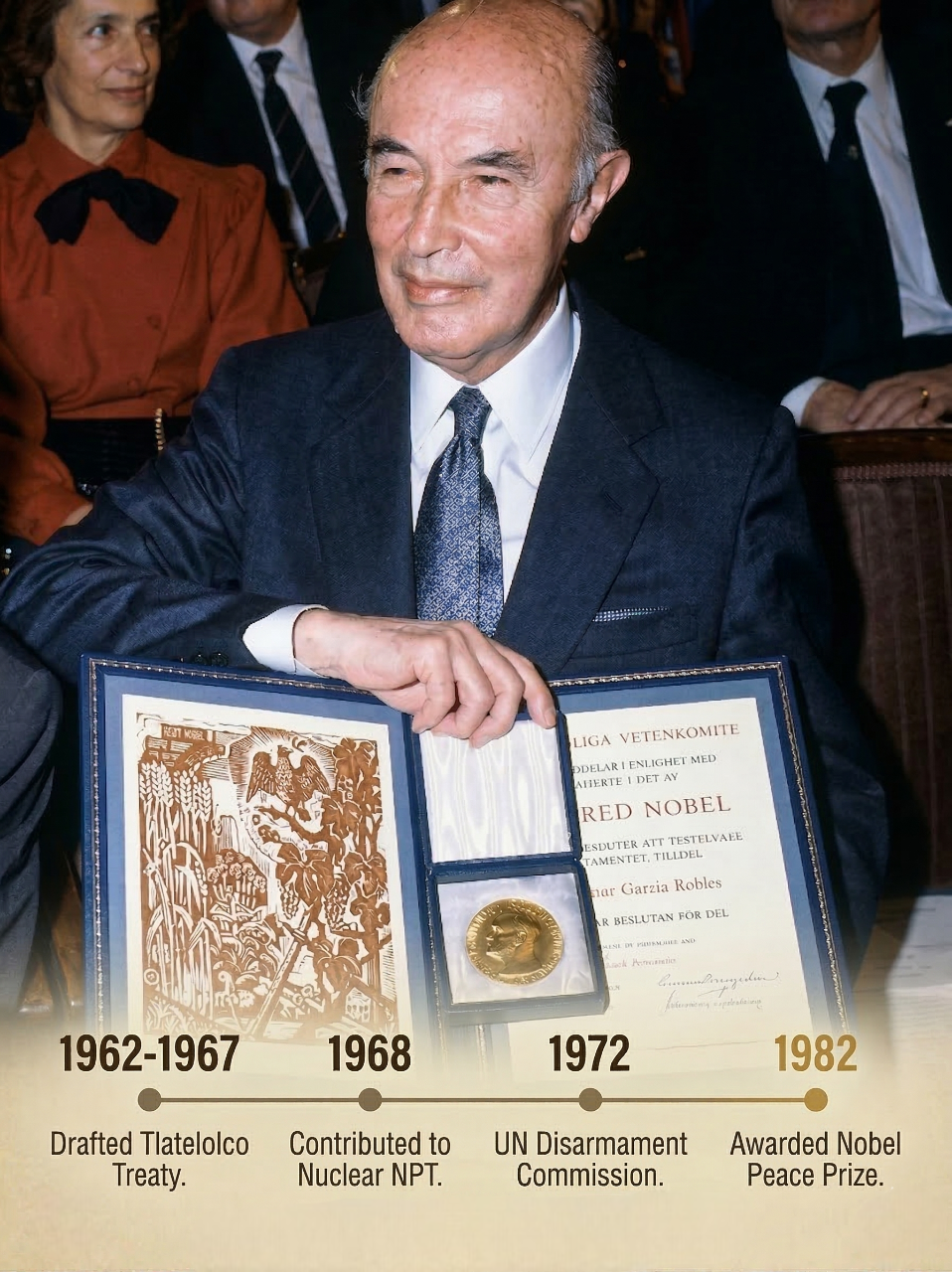
The legacy of figures like Alfonso García Robles continues to provide indispensable moral guidance in the face of the proliferation challenges the world faces today. In recognition of his immense diplomatic work and his role as an architect of the treaty, Alfonso García Robles was awarded the Nobel Peace Prize in 1982 (along with Swedish diplomat Alva Myrdal), becoming a global icon of denuclearization.
Press and Research References (Sources & Articles):
United Nations Office for Disarmament Affairs (2021). «Anniversary of the Treaty of Tlatelolco | UN Disarmament Chief»United Nations.
Book «The Treaty of Tlatelolco and the epicenter of nuclear weapons».
Book: «The Treaty of Tlatelolco: historical context and characteristics».
Documentary History. «The Mexican Nobel Peace Prize and the Treaty of Tlatelolco.
and 75 more……………
Video Title: JFK’s speech at American University, June 10, 1963
Legal Disclaimer:
This is a completely free research article, produced by a non-profit association for informational purposes only. Its distribution is authorized exclusively by IT Capital. Any other use is not authorized by IT Capital or its authors.
Partnerships & Sponsors


Chat

Follow

Join


Need financing or want to refer?

IT Capital ® | All rights reserved | 2026